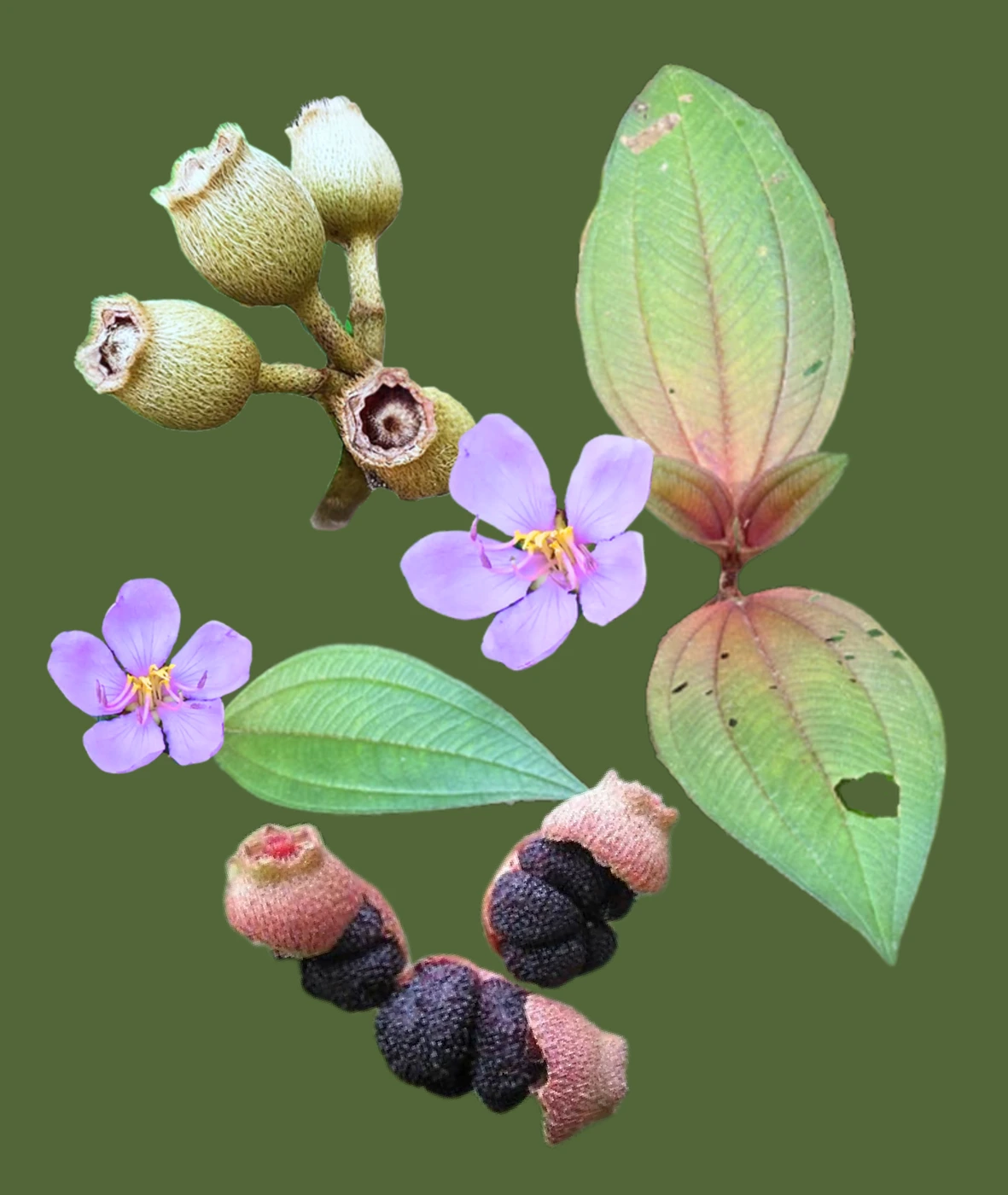
When the fruit opens
Uncle Zhou remembers Ongzanfang fruit splitting open when ripe. Its taste was both astringent and sweet, and children in the hills loved to gather it as a snack. He places the plant in broad patches on wooded slopes and recalls its flowering season in May.
These details give the memory a setting and a stage in the plant's life: the hillside where it grew, the flowers that appeared, and the fruit when it was ready to eat. His account is grounded in familiarity with those changes, remembered through the pleasure of a childhood food.
An ordinary leaf in daily life
The leaves carry another set of memories. Before toilet paper was available, Uncle Zhou says, people softened them in their hands for wiping. He also recalls crushed leaves being used to stop bleeding, a medicinal use recorded as part of local practice.
In both recollections, the way the leaf was handled matters. Softening and crushing are small actions, but retaining them gives the account a practical texture. The plant's place in daily life emerges through the tasks it helped people undertake, alongside the fruit that children sought out. The source preserves these everyday uses with the same attention it gives to the flowers.
A portrait across several forms
The original collage gathers purple flowers, veined leaves, and fruit at different stages into a single portrait. It lets the reader connect the appearance of the plant with Uncle Zhou's recollections of gathering and handling it.
The booklet calls it Ye Mudan Hua, or wild mudan, while explicitly distinguishing it from peonies. Its categories are food and ornamental plant. Uncle Zhou's account adds further dimensions to that brief label: a childhood taste, a household material, and a remembered remedy. Together, image and testimony preserve several ways of recognising the same hillside plant.