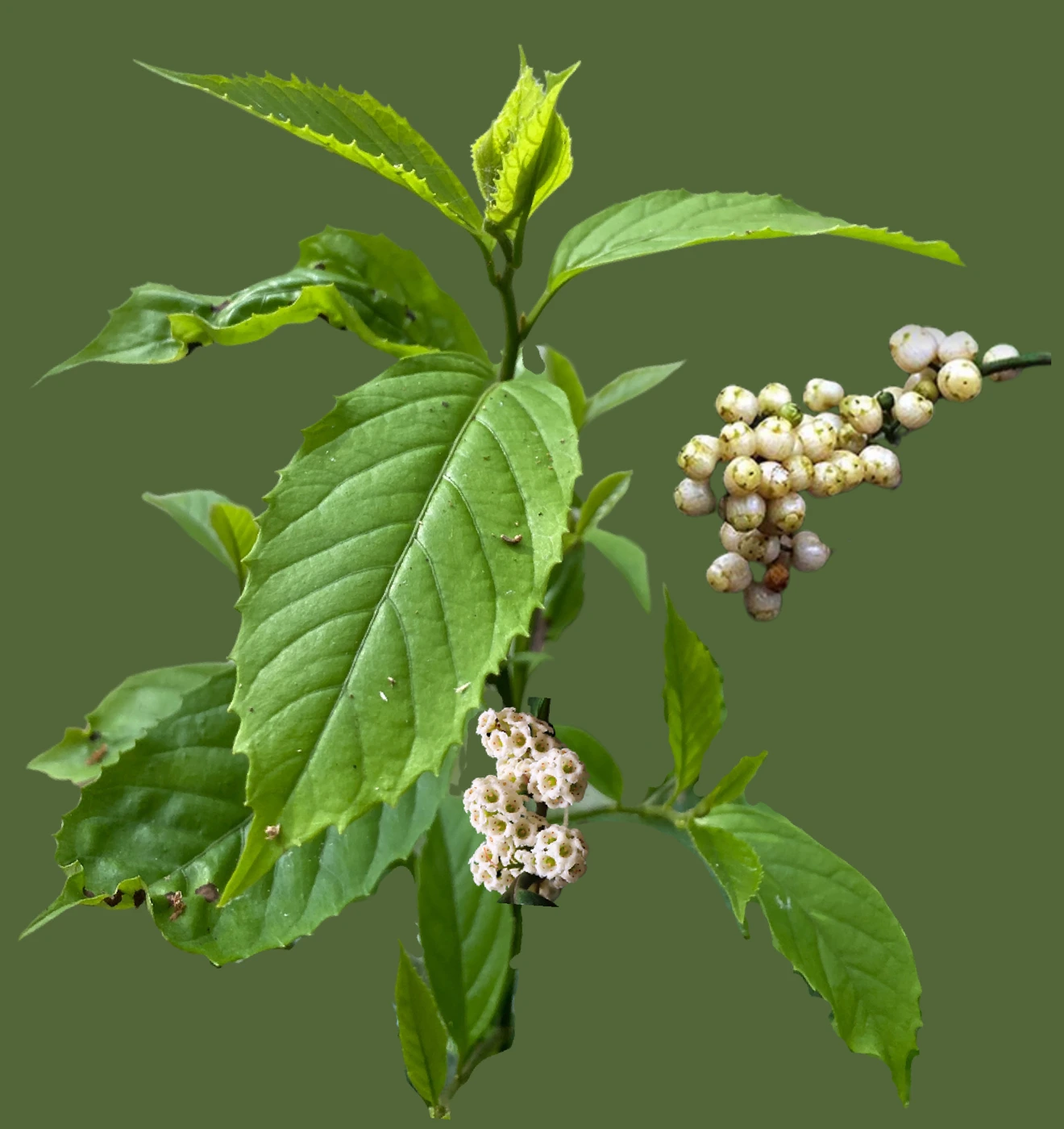
A branch at the doorway
Uncle Zhou describes a practice associated with a woman recovering after childbirth: a branch of Nwargiagwarn is hung at the household doorway for protection. In his account, the plant is regarded as able to ward off harmful influences. The practice is retained here as the narrator's testimony in the supplied collection.
He also gives it a role in communication with spirits, deities, and ancestors. The branch at the entrance is one specific expression of that wider understanding. In his telling, the plant connects a vulnerable moment in domestic life with forms of protection extending beyond the household.
Water, blessing, and a remembered taste
Li Minglong recalls ceremonies for peace and protection on the first and fifteenth days of each lunar month. Nwargiagwarn was placed in a bucket and used with clean water to sprinkle people. The act was understood as cleansing the soul, bringing the plant into a recurring communal practice as well as the doorway of an individual home.
Uncle Zhou's memories also include its tender leaves being chewed for stomach pain and its fruit being gathered as a childhood snack when other treats were unavailable. These medicinal and food uses appear beside the sacred associations in the same account. The plant moves between the ceremonial calendar and the ordinary recollections of growing up.
Knowing what earlier generations did
Li does not claim to know why Nwargiagwarn has its ceremonial role. What he knows is that his father's and grandfather's generations practised the same sprinkling ritual. The distinction matters: he identifies the continuity he has inherited while leaving its explanation open.
His answer suggests one way knowledge persists through participation and memory. The page retains that uncertainty alongside the details he can describe: a plant, a bucket of water, particular days of the month, and the example of earlier generations. Those details give the tradition its remembered form.