The work behind a string of beads
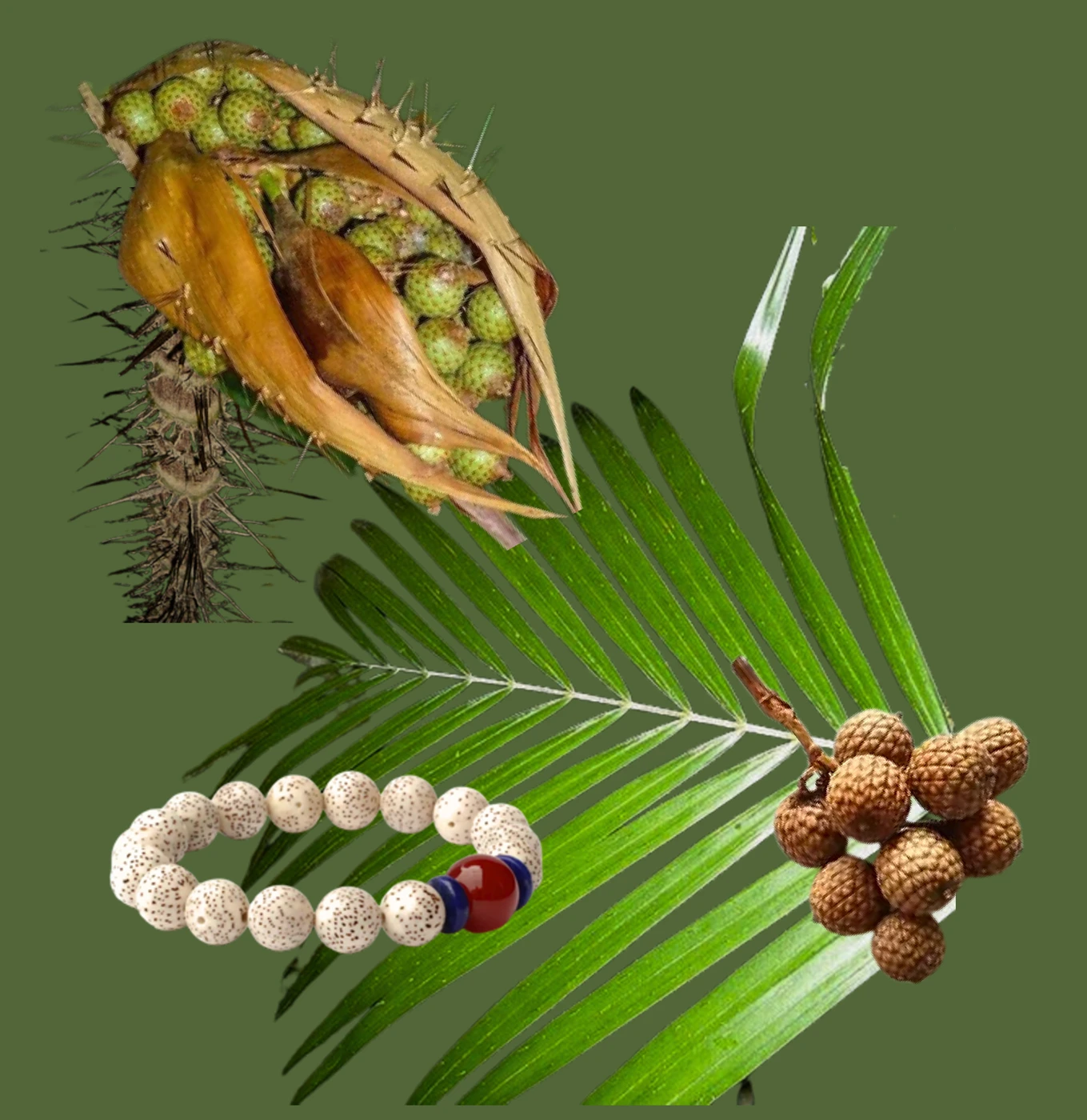
A bracelet appears among the plant parts in the portrait of Gardangdion. Uncle Zhou explains the connection: its seeds are the material used to make 'star-and-moon bodhi' beads. Gathering them was an important source of income for people who worked in the mountains.
His account brings the labour of collection into view. The plant is covered in spines, and gathering is arduous. He places the fruiting season in November, giving the finished object a link to a particular period of forest work as well as to a living plant.
A vegetable for special occasions
Gardangdion also enters the kitchen. In Uncle Zhou's account, only female plants bear fruit. Male plants were therefore used chiefly for their tender inner shoots, a treasured wild vegetable. He remembers this dish being prepared for important festivals and celebratory banquets.
The distinction between fruiting and non-fruiting plants guides two different uses in his telling: seeds for beads and shoots for a special meal. He says the dish has become increasingly rare. The source leaves the reasons open, preserving his observation of change without identifying a particular cause.
Keeping the plant and the object together
The original collage places a spiny plant structure, foliage, fruit, and a bead bracelet beside one another. The arrangement gives visible form to connections that might be less apparent when the bracelet is encountered on its own. Uncle Zhou's account supplies the gatherer's work behind that transformation.
The remembered festival dish extends the portrait in another direction. The same plant belongs to income earned in the forest and to food reserved for significant gatherings. Read together, these uses suggest why a plant's local value can be difficult to capture with a single label: different parts connect with different kinds of work and occasion.