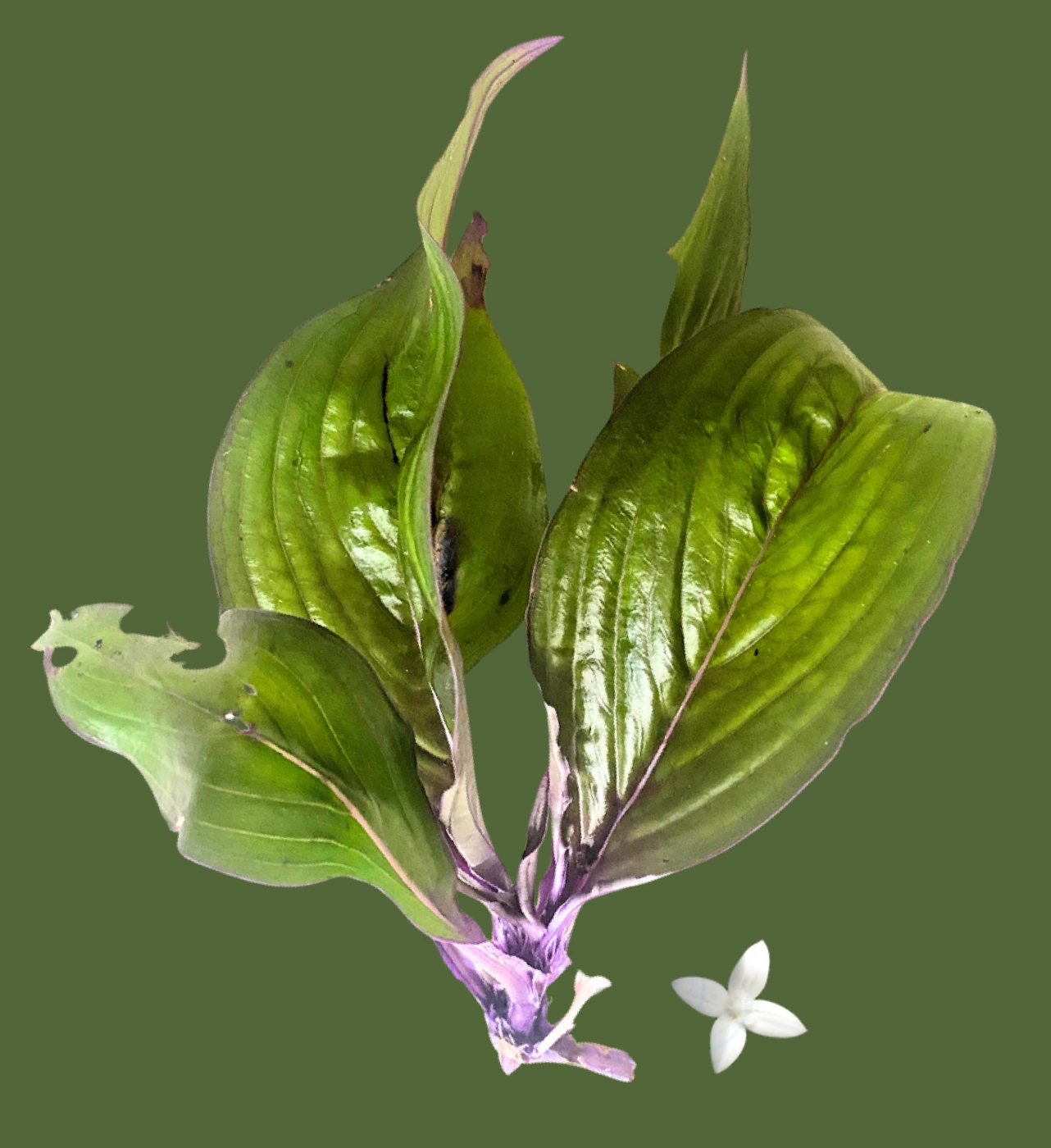
A name that recalls a use
The booklet translates Lim'ongwar as 'swollen-face herb.' Before any account of preparation, the name already points towards a bodily experience associated with the plant. Li Minglong, a mountain forest guide and collector of medicinal plants, describes its local use for acne and boils.
His contribution is brief. Beside it, Uncle Zhou, a mountain forest guide and photographer, supplies memories of other household treatments. The two voices give the entry its shape: a local name, a statement about use, and recollections of practices remembered from village life. The Chinese identification recorded alongside the local name is Bihua Ercao.
Remembering household care
Uncle Zhou recalls leaves being warmed and crushed in traditional treatments for childhood mumps. He also remembers an older rural practice in which the warmed plant was used in caring for children with rectal prolapse. These are memories of household treatment recorded by the project, rather than established medical guidance.
His recollections give the plant a place within the care of children, while Li's comments connect it with other skin complaints. Read together, the accounts suggest how a plant can be remembered through several situations in which people have turned to it. Each use remains attached to the person who describes it.
An unexpected image of the forest
Uncle Zhou ends with a different kind of observation. To him, Lim'ongwar looks as though it belongs in a forest of black magic. The booklet preserves this as his personal impression, without presenting it as a shared ritual belief.
That imaginative remark sits beside the practical memories of care. It gives the entry something beyond a catalogue of uses: a glimpse of the particular way one contributor sees a familiar plant. The translated name recalls swelling; Uncle Zhou's closing image carries the reader back into his idea of the forest.