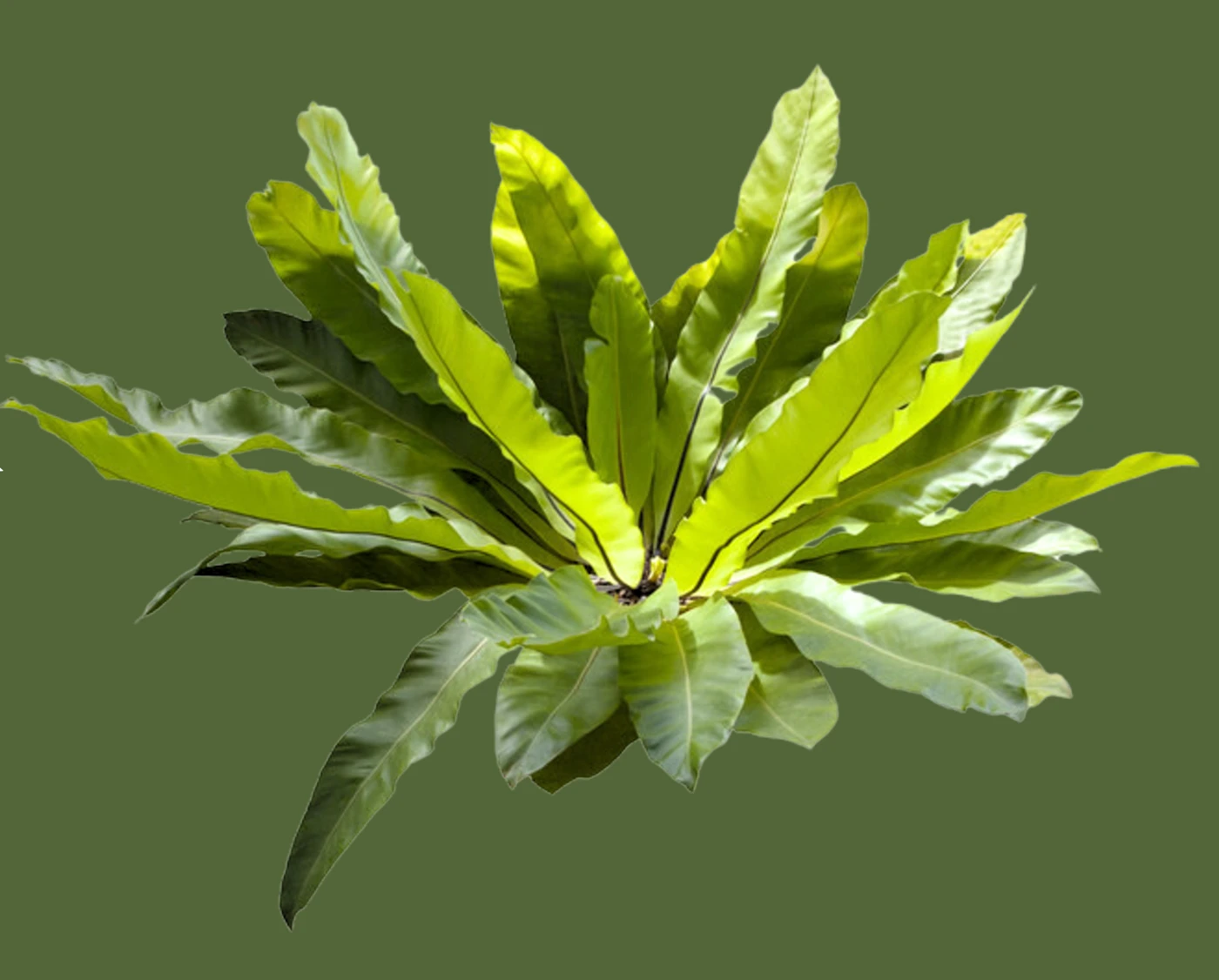
A fern outside the home
Outside Li Minglong's home, the source editor encounters a bird's-nest fern spreading more than 1.2 metres across. The account admires the way it has been allowed to grow in its own form. The household lives with this broad, leafy presence by the house, appreciating its beauty while also making use of it.
The local name, Noigongdou, is glossed through a resemblance to a phoenix's tail. That image of form accompanies the source editor's appreciation of the fern's appearance. Its leaves enter the household's cooking and traditional medicine, giving the plant several connections to the family whose home it grows beside.
Leaves for the table and for care
Li describes cooking the tender leaves with meat, especially fatty meat. He says they absorb oil and make the dish feel less rich. His appreciation concerns the way an ingredient behaves in a meal: the fern is remembered in relation to another food, and to the experience of eating them together.
He also identifies it as an important ingredient in his father's inherited mixture of more than a dozen plants used for injuries. Li distinguishes two locally recognised kinds, saying that the kind with divided leaves is unsuitable for this use and very bitter. His distinction is preserved here as local knowledge; the two kinds have not been independently identified.
Appreciation and use
The source account presents the fern as a small expression of mutual care: the family appreciates its beauty while collecting leaves from it. For the editor, this relationship draws together appearance, food, and inherited knowledge of healing. Appreciation and use coexist around a plant that has been given room to grow in its own form.
Returning to the fern outside the house gives that reflection a concrete setting. Its broad spread is part of daily domestic surroundings, while its leaves enter other activities. The plant remains a visible presence in its own right throughout these different relationships.