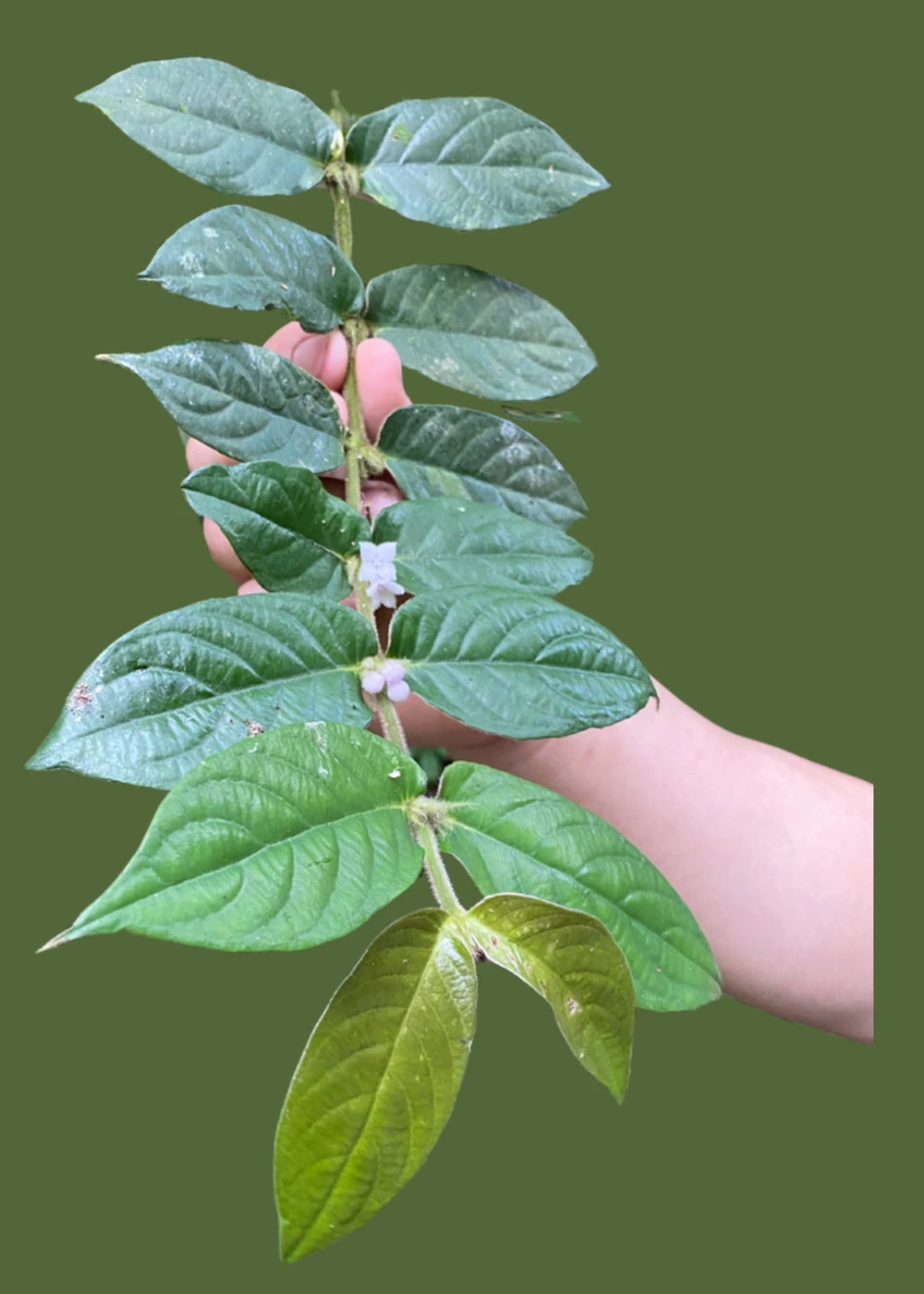
Following a grandfather
Li Minglong remembers going out with his grandfather to herd cattle. When mountain leeches bit the animals, his grandfather gathered Gwoiadei leaves, which were used locally to stop the bleeding. The plant enters Li's recollection through a task shared with an elder and a moment of attention to an animal.
Herding brought grandfather, child, cattle, leeches, and leaves together. Li's knowledge of Gwoiadei is attached to what his grandfather did when a problem arose. The memory suggests how accompanying someone at work can also become an occasion for learning about plants, with an elder's response giving that knowledge a practical setting.
Leaves, wounds, and smell
Li describes a similar traditional use for bleeding from cuts or leech bites, recalling crushed tender leaves being applied to the affected place. He also says that leeches dislike the plant's smell and remembers it being rubbed on the body as a deterrent. He thus associates Gwoiadei with both tending wounds and avoiding bites.
Smell has a place alongside the remembered uses of the leaves. Li also connects care for cattle with care for people: the same named plant appears in both. His grandfather's attention to the animals belongs to this wider recollection of care, joining a family memory to practices he remembers from life in the mountains.
A lesson with a setting
Gwoiadei records a local pronunciation recorded in the source; its recorded Chinese name is Xieji Cuyemu. Alongside these names, Li remembers a person and an activity. His grandfather's response to the bitten cattle gives this plant a particular place in his memory. The knowledge has a human relationship attached to it, as well as a leaf and a name.