The rhythm of work in the hills
Wang Xiongxian remembers water buffalo in the mountains feeding mainly on the leaves of small trees. Their movements followed the farming calendar. During quieter periods, people drove them to slopes farther from the village. When agricultural work intensified, the animals returned to plough and trample the fields, and to haul firewood and timber from the hills.
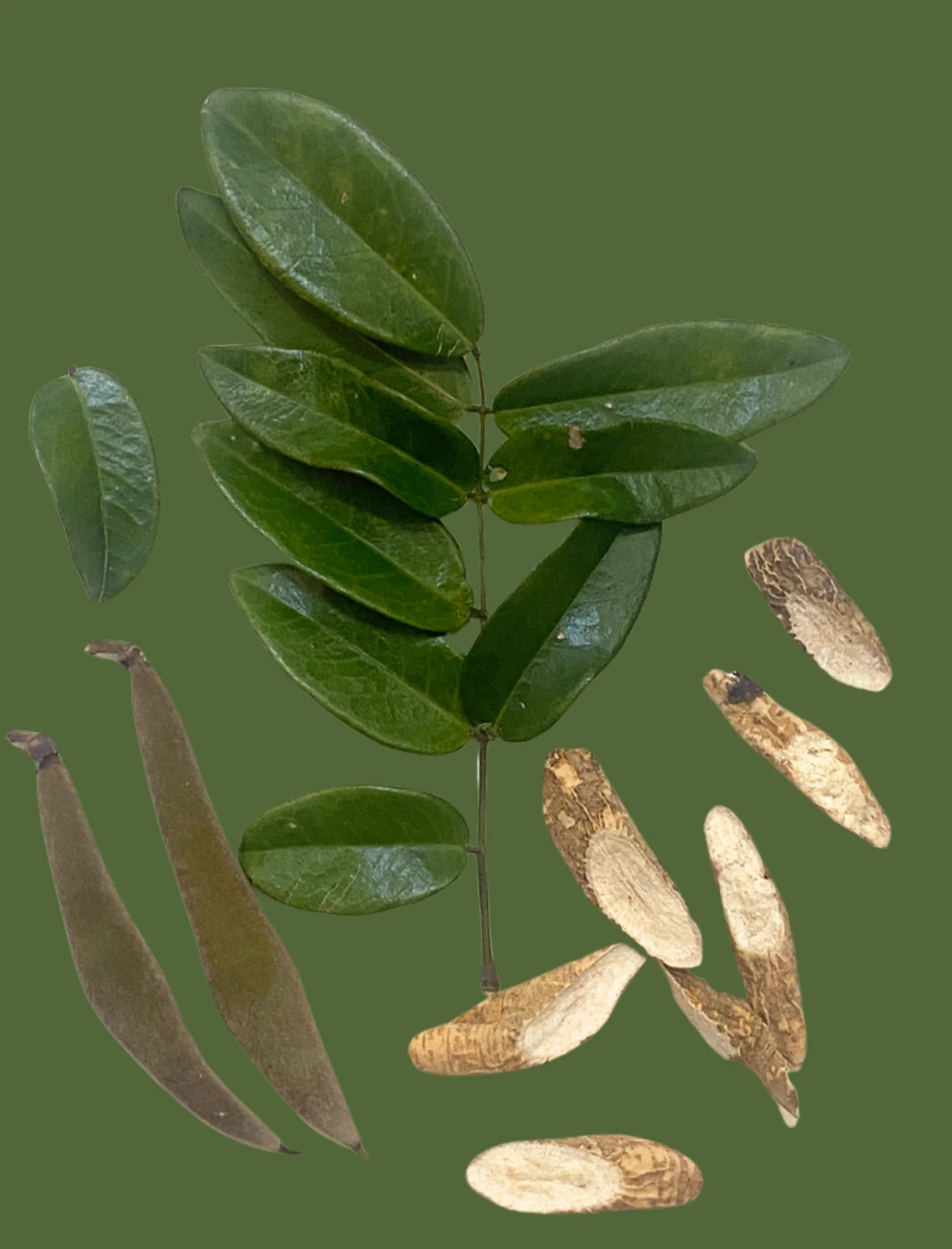
Niudali appears at the end of this work. Wang recalls owners giving the buffalo wine infused with the plant, believing that it would help restore their strength.
A restorative shared by people and buffalo
Both people and buffalo drank the infusion. Wang preserves a particular detail of animal care: the drink was delivered directly into a buffalo's mouth through a bamboo tube. His recollection ties the plant to the demands placed on working animals and the attention they received afterwards.
Li Minglong adds a comparison from local medicinal practice. For the traditional purposes of strengthening yang and nourishing the kidneys, he considers Markied more effective than Niudali. The two contributions preserve different contexts of use: Wang's memory of agricultural work and Li's assessment of remedies. These remain attributed accounts of local practice.
How Wang came to know the mountains
The booklet draws Wang's account from a short essay about working buffalo. It introduces a narrator whose knowledge developed through time spent with people who farmed, gathered, and travelled in the hills. This context gives the account a human source as well as a botanical subject.
Wang learned much of his forest and farming knowledge from hunters during his years as a sent-down youth, and through conversations with village elders. After retirement, he spent a period gathering mulberries near his home village to make wine. His biography gives this plant account a route of transmission: learning through work, returning, and listening to people who knew the hills.