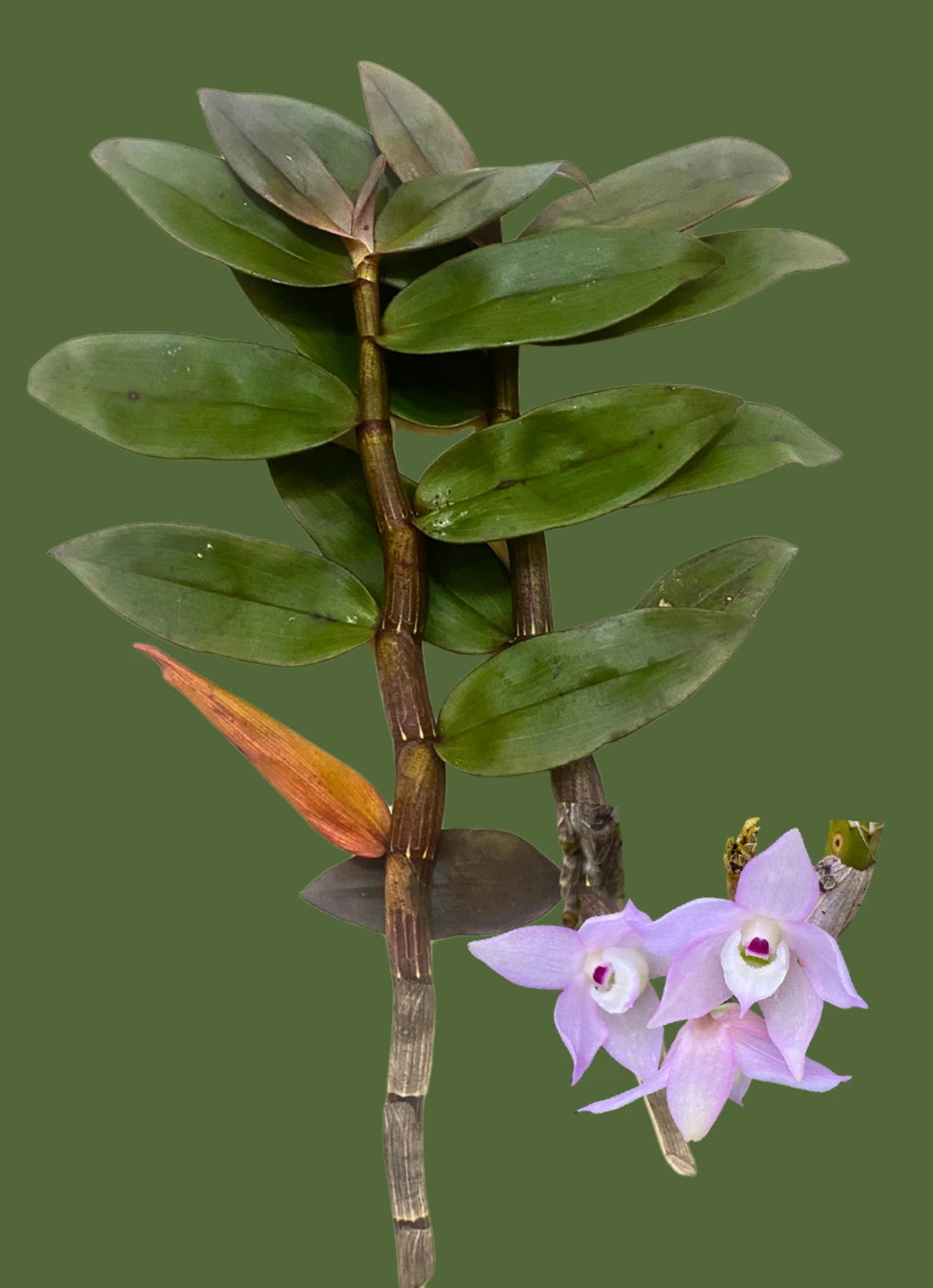
A few flowers in coffee
Li Minglong adds a few fragrant Diamgwar flowers to coffee for their appearance and aroma. His personal way of enjoying the flowers sits alongside a familiar medicinal dish, Shihu simmered with chicken. The plant's place at the table encompasses both the aromatic pleasure of a cup of coffee and associations with nourishment and healing.
Diamgwar is glossed as 'immortal herb' and grouped under Shihu, with four locally named kinds: Tiepi Shihu, Zipi Shihu, Hua Shihu, and Ju Shihu. Traditional uses recorded in the source include preparations for internal heat, mouth ulcers, and burns. These healing associations form part of the plant's remembered value alongside its fragrance and appearance.
Three years of cultivation
Diamgwar also became part of a cultivation venture. During a period of high prices, an investor from outside the area noticed how well the plants grew in the community described and established a project. Participating villagers received annual dividends of roughly two to three thousand yuan. After three years, the project stopped operating.
For a time, the plants connected village households to an enterprise and its income. Their ability to grow well in the community described had attracted the investor's attention; participation brought a financial return to villagers. This episode added a commercial association to the plant's household uses, leaving a remembered period of dividends and cultivation.
Plants after the project
When this story was recorded, orchids at villagers' homes were still growing on the pieces of wood to which they had been attached. Their presence continued beyond the commercial venture. The project had lasted three years, while the plants remained in domestic surroundings, a living trace of that episode of cultivation.
Placed beside Li's flowers in coffee, that ending gives Diamgwar several kinds of value within one story: medicinal association, sensory pleasure, and a remembered source of income. The plants remaining at people's homes hold these histories together in a tangible form, continuing to grow where a cultivation project once placed them.