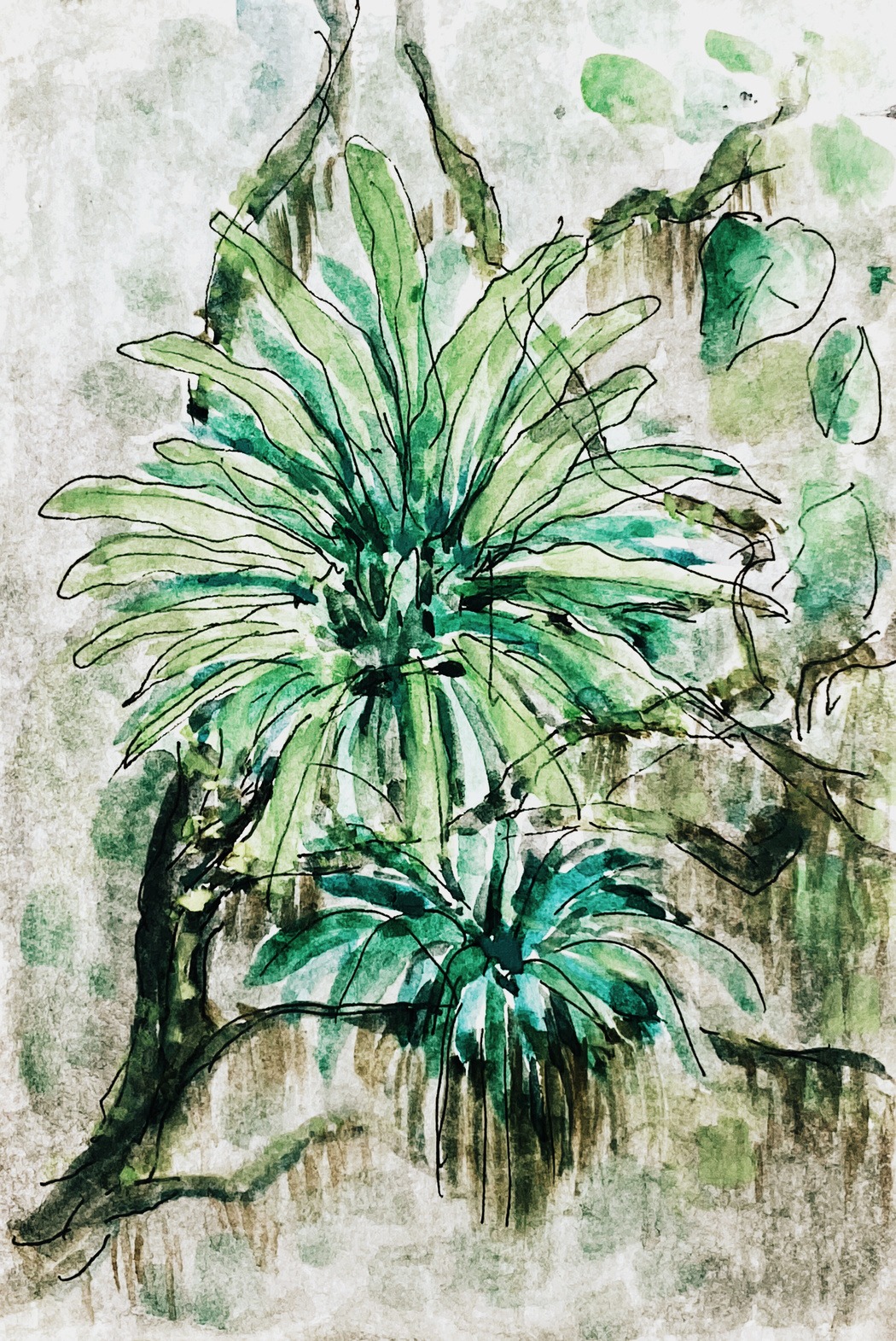
Six ferns overhead
In the archived field note, six bird's-nest ferns rest on the spreading branches of two trees above a winding stream. The account describes moisture rising from the water and darkening the branches, while other epiphytes cling nearby and mosses hang between them. The upward view suggests a small forest gathered in the air.
The drawing takes time. The account follows repeated glances upward, moments of wonder and continued sketching, before the observer runs to catch up with walking companions. In a more fanciful retelling, the person drawing becomes so absorbed in the forest that time is forgotten altogether. The image preserves both the plants and this interruption of the journey.
From rock face to household garden
A neighboring field note follows another bird's-nest fern growing on a rock face. It describes a slender plant beside those encountered on branches, attributing its form to the limited organic matter available there. New leaves catch the light against the darker forest, directing attention across different stages and places of growth.
The observations also extend to village homes, where the account describes households cultivating the fern and recalls a particularly large specimen in one courtyard. The notes bring wild and cultivated plants into the same account, alongside reported gathering practices and a hope that local livelihoods can support the continuing life of the forest.
The people beyond the picture
The canopy essay then turns to a campsite built by a host and a group of friends. Rain falls as white gravel is laid over the ground. Visitors cross it with dry shoes, settle beneath a shelter and drink coffee while mist rises from the mountains.
The account describes the hosts working as welders, carpenters, builders and designers to make this place. After the visitors leave for their city apartments, the hosts also travel to the city, taking jobs in factories and warehouses. A recalled photograph shows one host almost lost among rows of iron shelving. Set beside the airborne ferns, this memory draws hospitality, skilled labor and attachment to ancestral land into the same essay. Within the account, the forest is also a place to return to.